
OEM Alpha Port Best Practices for Flawless Integration
2026-10-03
Integrating an OEM Alpha Port without hiccups demands more than a standard checklist. Over the years, teams relying on AVM have learned that the difference between a flawless rollout and a debugging nightmare often comes down to a handful of overlooked details. In this post, we’ll unpack the practices that actually move the needle.
Start With a Clear Port Contract
Dock delays rarely come from bad luck—they usually start with a contract that leaves too much open to interpretation. Vague language around laytime, demurrage, and who pays for extra handling turns a routine port call into an expensive argument. A clear port contract spells out exactly when the clock starts, when it stops, and who bears the cost if the crane doesn’t move on schedule.
Beyond timing, the contract should pin down practical details: which party arranges and pays for pilotage, stevedoring, and storage; what happens if cargo is damaged between ship and gate; and how weather or port congestion changes the deal. Putting these in writing isn’t about mistrust—it’s about keeping both sides focused on moving freight instead of debating who said what.
Before signing, read the fine print with someone who understands local port practices. A clause that looks harmless in a template may conflict with terminal rules or customs procedures. The goal is a document that a stranger could pick up and know exactly what to do next, without a single phone call to clarify.
Tame the Handshake Before It Bites
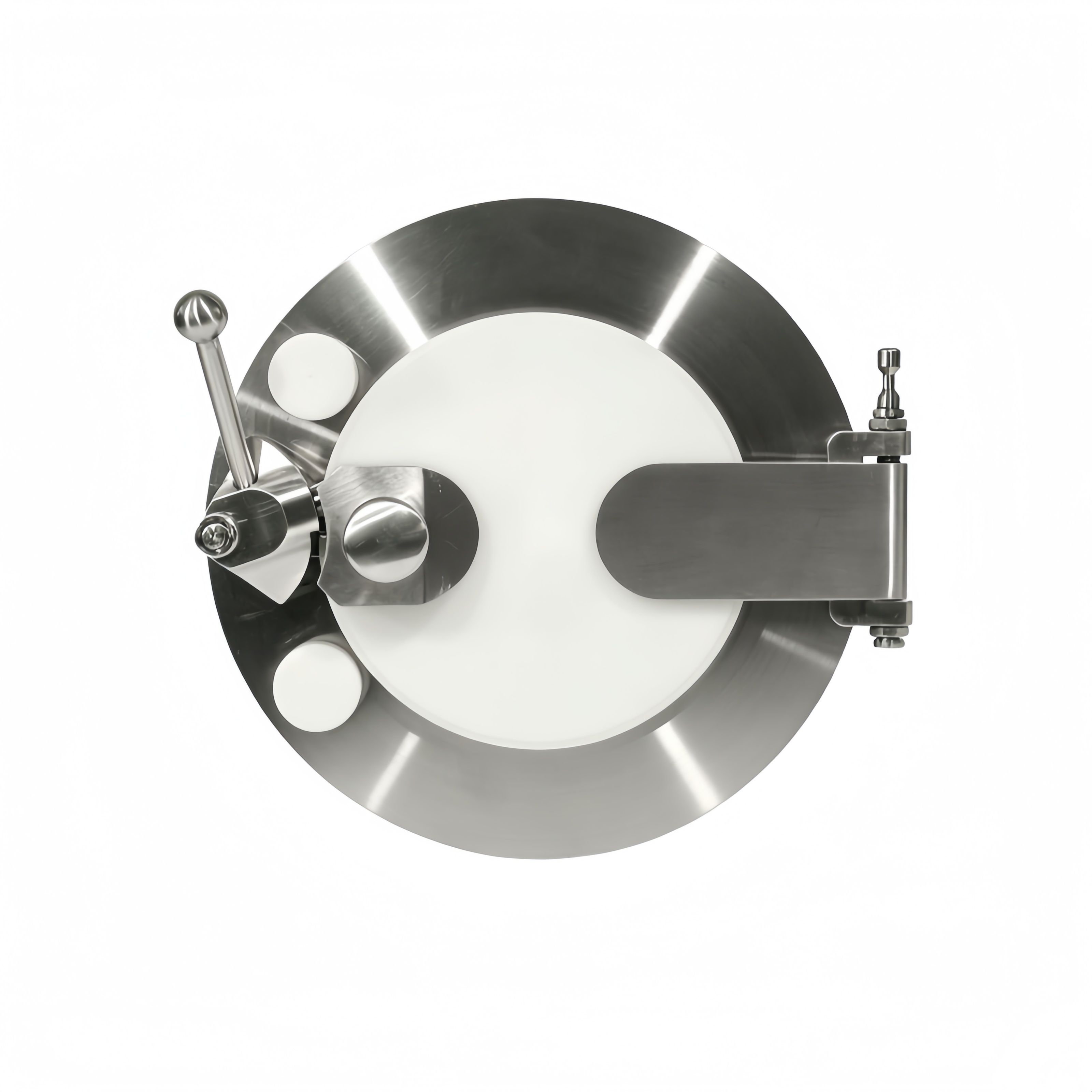
You know that moment when two systems first meet — a flurry of SYN packets, cipher negotiations, and barely-noticed parameters flying back and forth. Most people treat it as a formality, something to get past quickly. But that tiny window is where trouble often slips in. A handshake left to its own devices can turn into a slow-burning vulnerability, not because someone exploited a glaring flaw, but because the initial exchange quietly accepted conditions nobody actually reviewed.
Taming it doesn’t require rewriting the protocol. Start by cutting out the default permissiveness: pin down a strict timeout, drop anything with mismatched extensions, and refuse renegotiation unless you explicitly asked for it. Watch the order of the messages too — a server that changes its mind mid-handshake about which cipher to use is often probing for weakness. And never let the handshake finish just because it looked polite. Every parameter you leave wide open is a small bite waiting to happen, usually weeks later, when you’ve already forgotten this connection ever started.
The goal isn’t paranoia; it’s making the handshake earn its place. Validate the other side early, log what was agreed, and close the socket at the first sign of nonsense. Once you stop treating the initial exchange as a trivial hello and start treating it as the first real line of defense, the bites stop coming. And if something still gets through, at least you know exactly which part of the handshake to blame.
Log What Matters, Skip the Noise
Most log files turn into digital landfills. A request comes in, a line goes out; a cache miss, another line; a timeout, five more. The result is a stream so dense that the one entry that actually explains the failure is buried under thousands of routine status updates. Good logging isn't about volume — it's about choosing the few events that change what you do next. If a line won't help someone diagnose a problem or understand a user's path, it probably doesn't belong in the file.
The fix starts with asking what you'd want to know at 2 a.m. when something breaks. Include the transaction ID, the affected resource, the unexpected value, and the consequence. Drop the stack trace for a handled exception that retried successfully; keep the warning that retries are almost exhausted. Skip debug chatter that only made sense during local development. A lean log isn't less information. It's just the information that survives contact with a real incident.
Right-Size Buffers and Timeouts
Oversized buffers tend to hide backpressure until memory balloons, while undersized ones force constant copying and fragment the heap. The right size usually lands where the producer’s burstiness meets the consumer’s steady-state throughput, not where a configuration guide guesses it should be.
Timeouts follow a similar trap. Setting them too tight turns slow-but-valid work into retry storms, and setting them too loose leaves threads dangling long after a downstream service has gone dark. A better anchor is the actual latency distribution: one value for the median path, another for the tail, and a clear circuit-breaker threshold for when neither applies.
None of this stays fixed. Traffic patterns, payload sizes, and upstream behavior shift over time, so revisit buffer sizes and timeouts as part of routine capacity work, not just during incidents. Small, measured adjustments based on observed queue depths and timeout rates outperform any static “safe” default.
Secure Every Call Without Slowing It Down
A secure call shouldn’t feel like a trade-off. The encryption layer runs quietly in the background, adding only a few milliseconds to setup while keeping voice and video crisp. You won’t notice the handshake, but your data never travels exposed.
Instead of routing audio through bulky processing steps, the system authenticates each session in parallel with the codec negotiation. That means the first ring arrives just as fast as an unencrypted line, yet every packet after it is protected end-to-end.
The result is a call that holds up under real-world conditions: weak networks, background noise, sudden handoffs. Security stays on without demanding extra bandwidth or battery, so the conversation flows naturally from hello to goodbye.
Run Failure Drills Before Going Live
Nobody wants to discover how their system behaves under stress when real users are already in the middle of it. Run failure drills before going live means deliberately breaking things in a controlled pre-production environment—kill a database replica, saturate a message queue, cut off access to an external API—then watch how your monitoring, alerting, and incident response actually hold up. This is not a checkbox exercise; it’s the only way to learn whether your fallback logic, retry budgets, and runbooks work when they’re needed most.
Pick three or four failure scenarios that map directly to your riskiest dependencies and single points of failure. For each one, define the expected blast radius, the alert threshold, and the rollback path before you start. Use chaos engineering tools or even simple scripts to inject latency, drop packets, or exhaust connection pools. Pay close attention to the human side too: who gets paged, how fast they acknowledge, and whether the on-call engineer can actually find the right dashboard or log stream without help. If the drill reveals that your team only recovers because someone remembered a command from a past incident, that’s a gap to close.
After each drill, turn every surprise into a permanent improvement. If a timeout value was too aggressive, adjust it and add a regression test. If the alert fired but nobody noticed for ten minutes, rework the routing and notification channels. Run these drills on a regular cadence, not just once before a major launch, so that failure becomes a familiar, almost boring event. That’s the goal: by the time you go live, failure is no longer a dramatic unknown but a rehearsed, well-understood part of operating the system.
FAQ
It hinges on trace length matching and consistent impedance control. Many teams overlook the return current path, which can introduce jitter that only shows up under thermal stress. Keep the differential pairs tightly coupled and avoid routing near switching regulators.
A common pitfall is assuming the port is ready immediately after reset deasserts. Insert a short delay, check the link status register rather than relying on a fixed timeout, and handle the "port present but not trained" state explicitly. Retry with backoff instead of hard faulting.
The port expects the 1.8V rail to ramp before the 3.3V I/O supply, but many designs tie them together. Even a 200 microsecond gap can prevent latch-up. Use an adjustable sequencer and verify the ramp order with an oscilloscope during bring-up, not just in simulation.
Field failures often trace back to cable quality and insertion cycles. The port's equalization settings that worked on a short lab cable may be too aggressive for a worn 2-meter cable. Add margin by testing with intentionally degraded cables and enabling link training diagnostics.
Strain relief and connector alignment. A perfectly routed PCB can still suffer from intermittent disconnects if the connector floats too much relative to the enclosure. Use a mid-board mount with tight tolerance, and consider adding a ground spring contact to the shell.
Do not treat a sudden disconnect as a fatal error. Clear the pending interrupt, wait for the debounce timer to expire, and attempt a clean re-enumeration only after the presence detect line has been stable for at least 50 ms. Log the event without resetting the entire host stack.
A reference design is a starting point, not a finished product. It rarely accounts for your specific stackup, connector placement, or enclosure grounding. Copying it verbatim often leads to edge-case failures. Validate signal integrity with your exact PCB materials and layer count.
Add a soak test that cycles power, link, data transfer, and idle states in a random order. Run it across temperature corners and voltage margins. Many timing bugs only appear when a state transition interrupts another, so scripted deterministic tests can miss them.
Conclusion
A solid integration with the OEM Alpha Port starts long before the first message crosses the wire. Define a precise port contract that pins down message schemas, field types, error codes, and versioning rules—anything left ambiguous will surface later as a silent mismatch. Pay equal attention to the handshake sequence: a half-open connection or a retry storm often begins with an unclear acknowledgement, so make every state transition explicit and test the edge cases where peers disagree. Logging should focus on correlation IDs, timestamps, and outcome codes, not raw payload dumps or verbose debug traces that bury genuine failures under noise.
Buffers and timeouts demand measurement, not guesswork. Observe actual burst sizes and set ceilings that allow slow downstream responses without hanging the caller, and avoid over-allocating memory just to feel safe. Security belongs at the edge—mutual TLS and token validation should be enforced once, not repeated inside every service, so latency stays flat and operations stay sane. Finally, run failure drills in staging before going live: simulate port downtime, slow consumers, malformed payloads, and token expiry. Watch how the system recovers without manual intervention, and only then trust the integration to production traffic.
Contact Us
Contact Person: Ananda
Email: [email protected]
Tel/WhatsApp: 8619016718200
Website: https://www.wzaomi.com